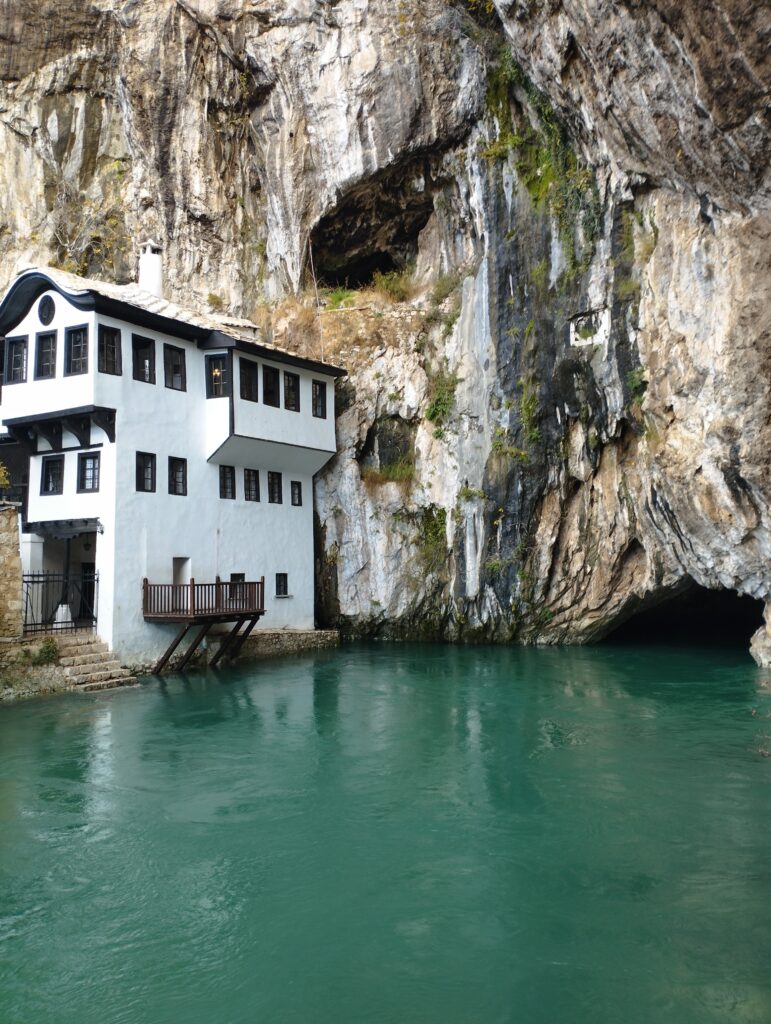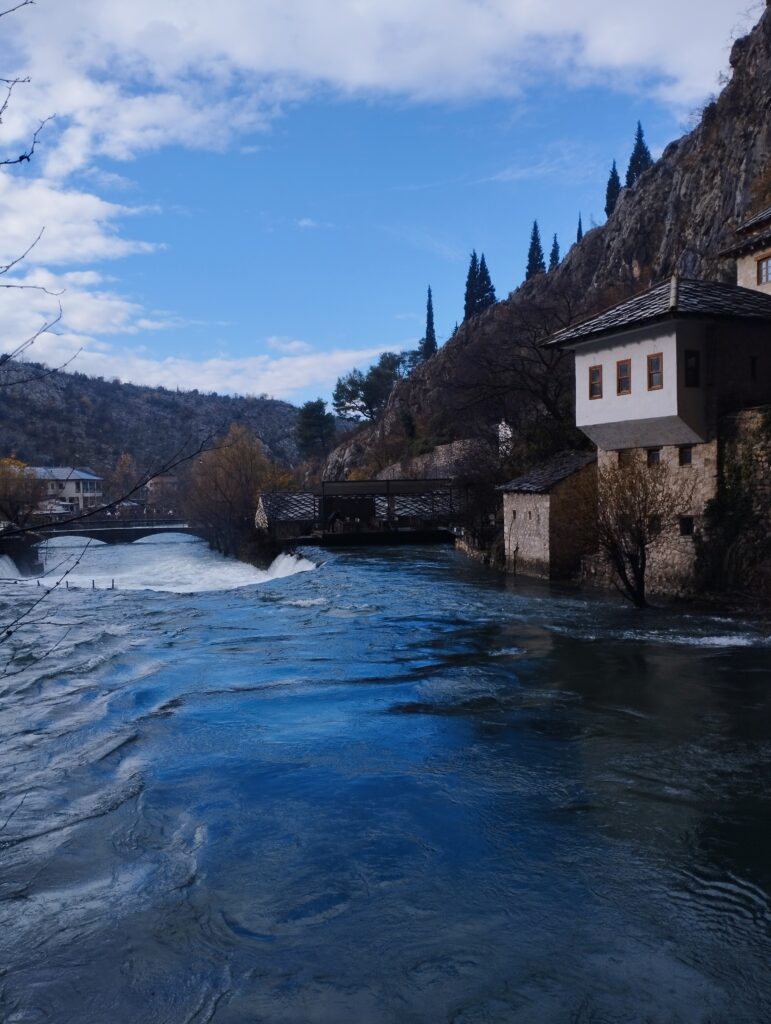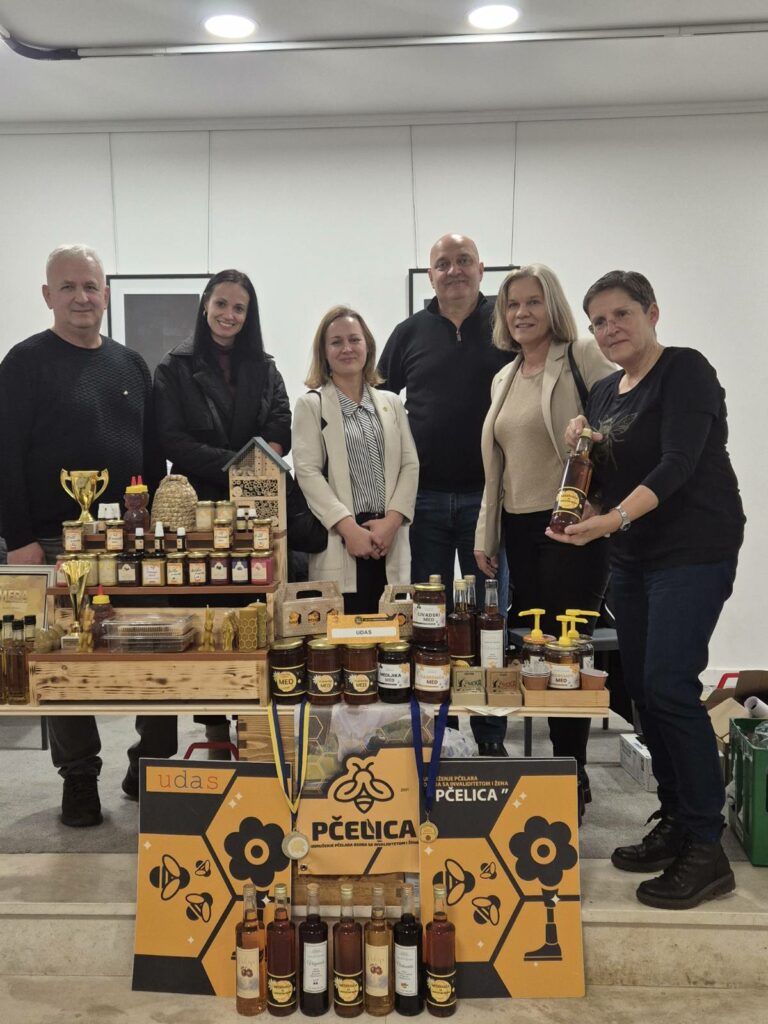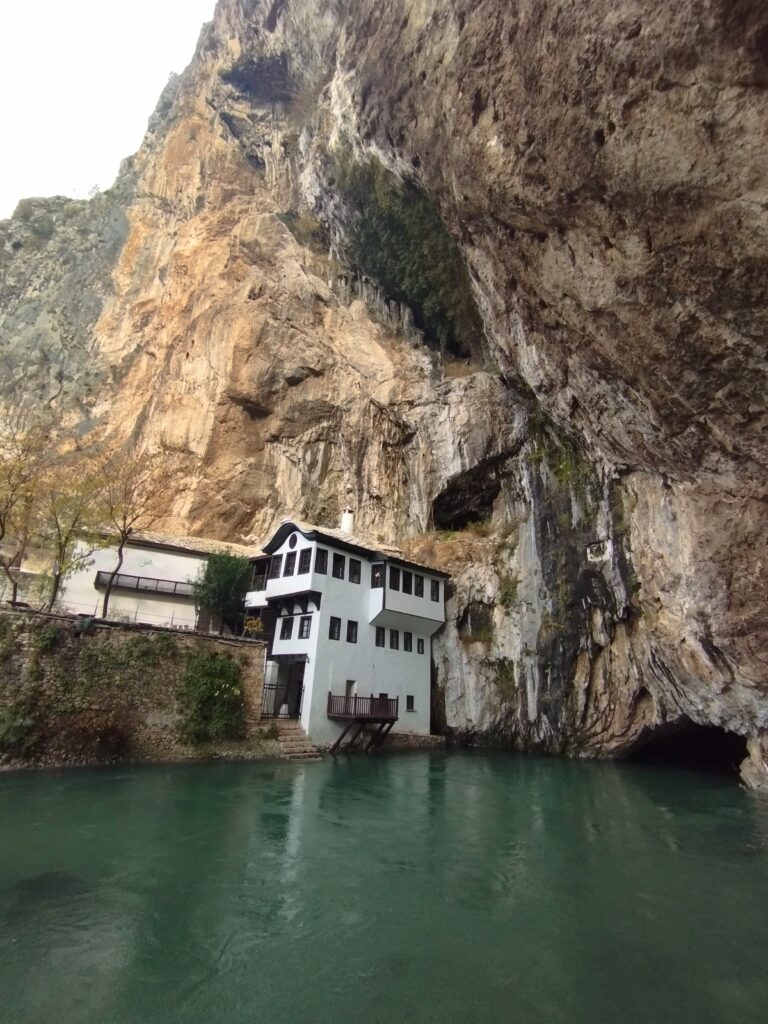
In Mostar, we carried out a multi-day project together with OSI MEN Hercegovine, UDAS, ITF, and SČA KIS, with the support of the donor, the Republic of Korea. The project was dedicated to empowering persons with disabilities – particularly beekeepers who are landmine survivors, and to the development of sustainable beekeeping, apitourism, and knowledge transfer in the region.
OSI MEN Hercegovine (the Association of Persons with Disabilities from Herzegovina who are survivors of landmines) is committed to developing apitourism and apipedagogy, improving the beekeeping knowledge of its members, and raising public awareness about honey, bee products, and the importance of bees for both people and the environment.
Day One: Connection, Knowledge, and Public Dialogue
The first day of the project was dedicated to meetings, the exchange of experiences, and public dialogue. In the morning, we began with a working meeting with beekeepers and a visit to an apiary, where participants shared their personal stories, professional challenges, and the opportunities that beekeeping offers as a form of long-term rehabilitation and livelihood.
This was followed by a working meeting with government representatives, ministries, the tourism sector, and local authorities. The discussions focused on the potential development of a Honey Trail, the legal and certification framework for apitourism, and examples of good practice from Slovenia.
Honey, Culture, and Inclusion
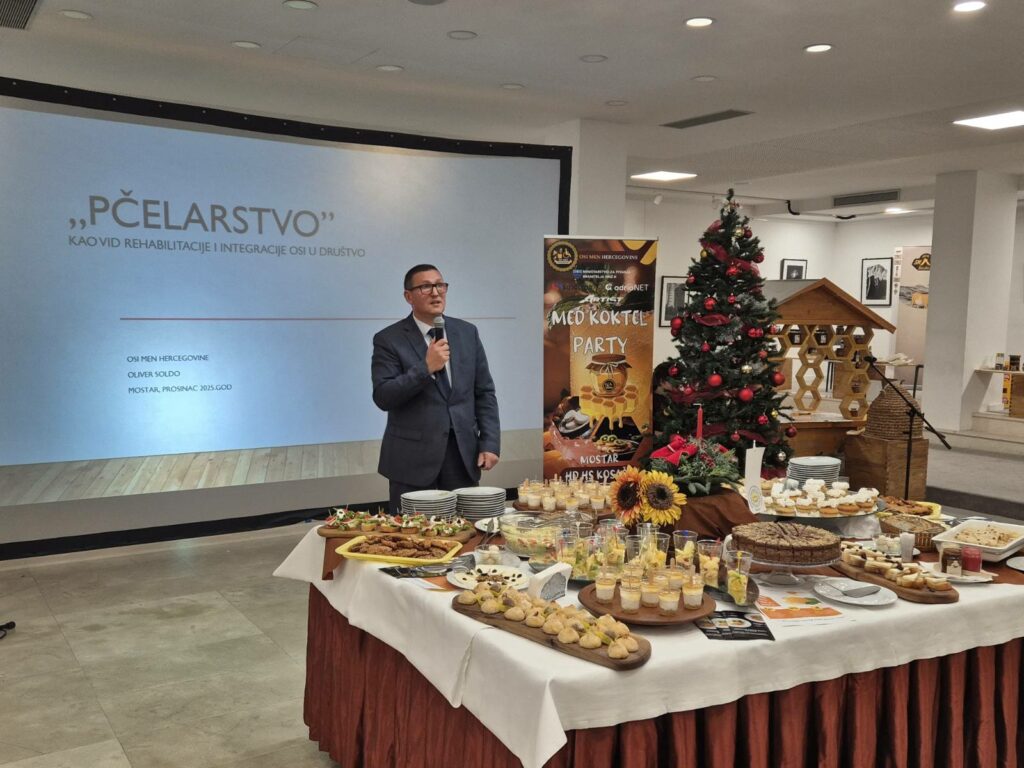
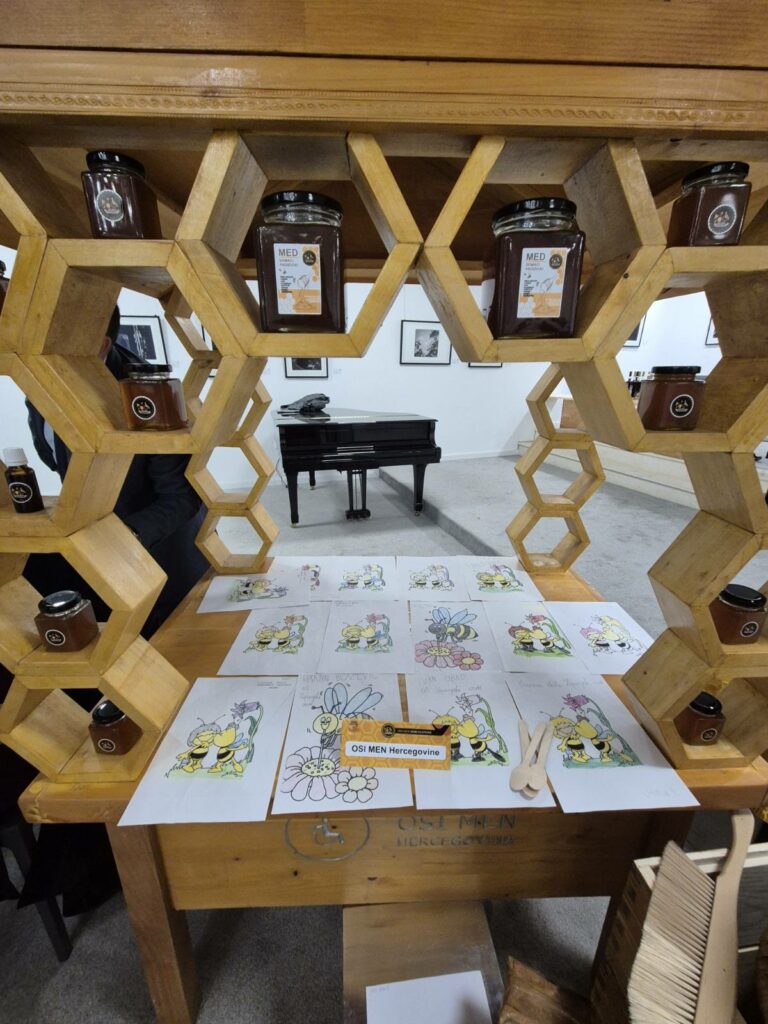
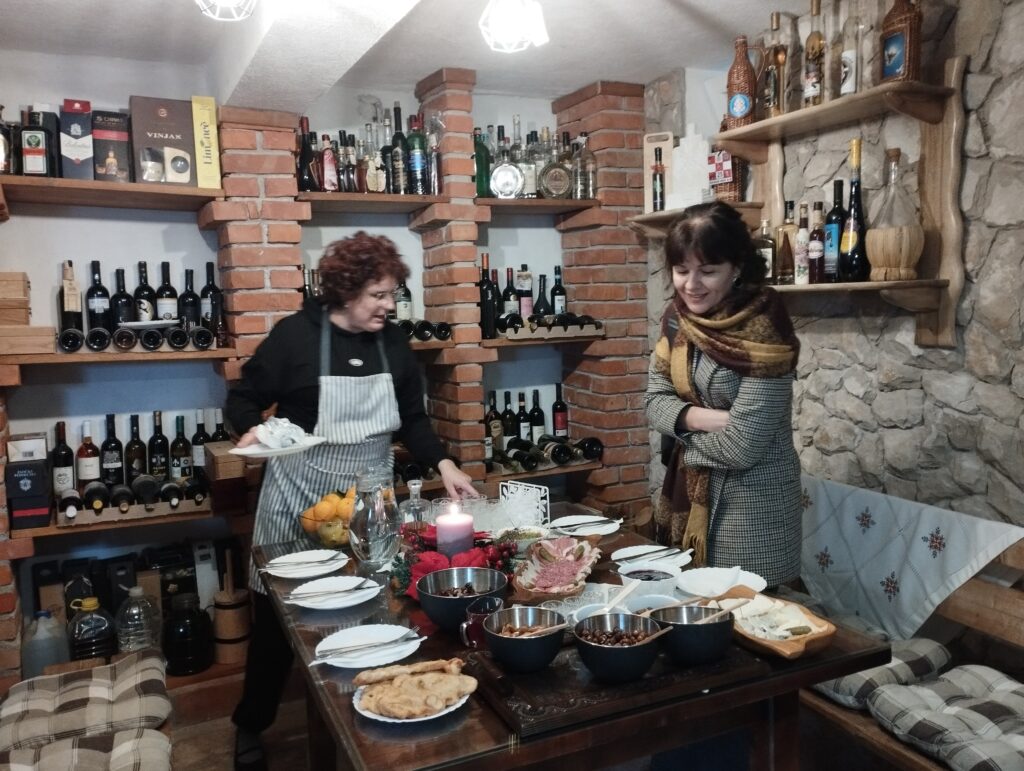
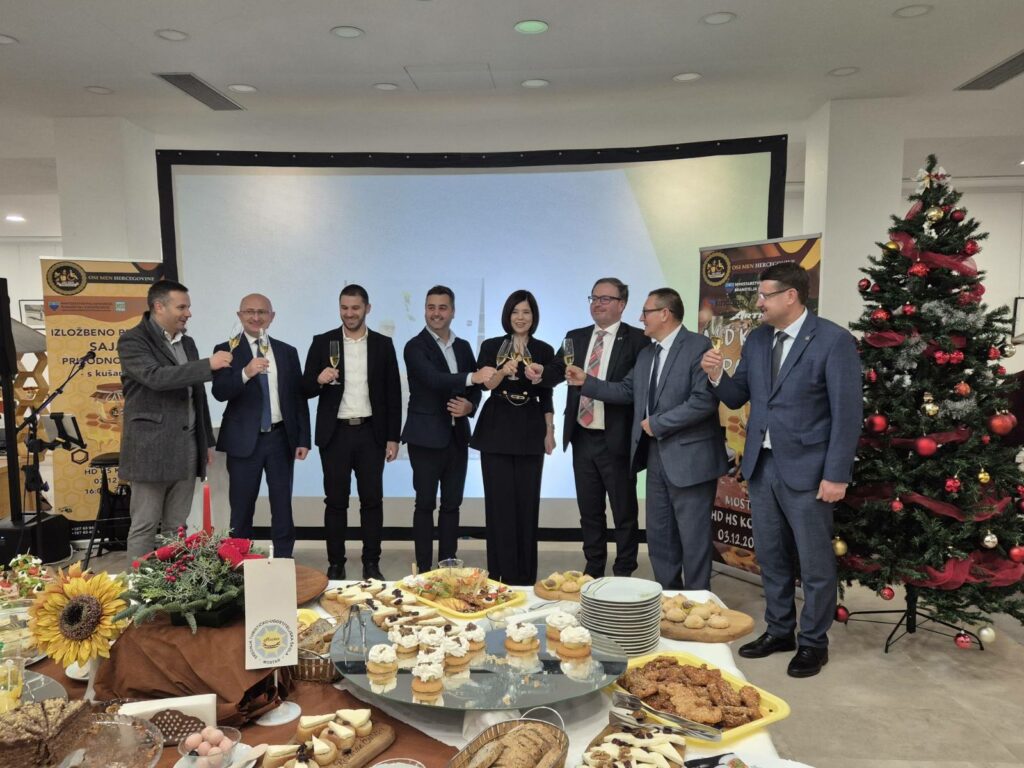
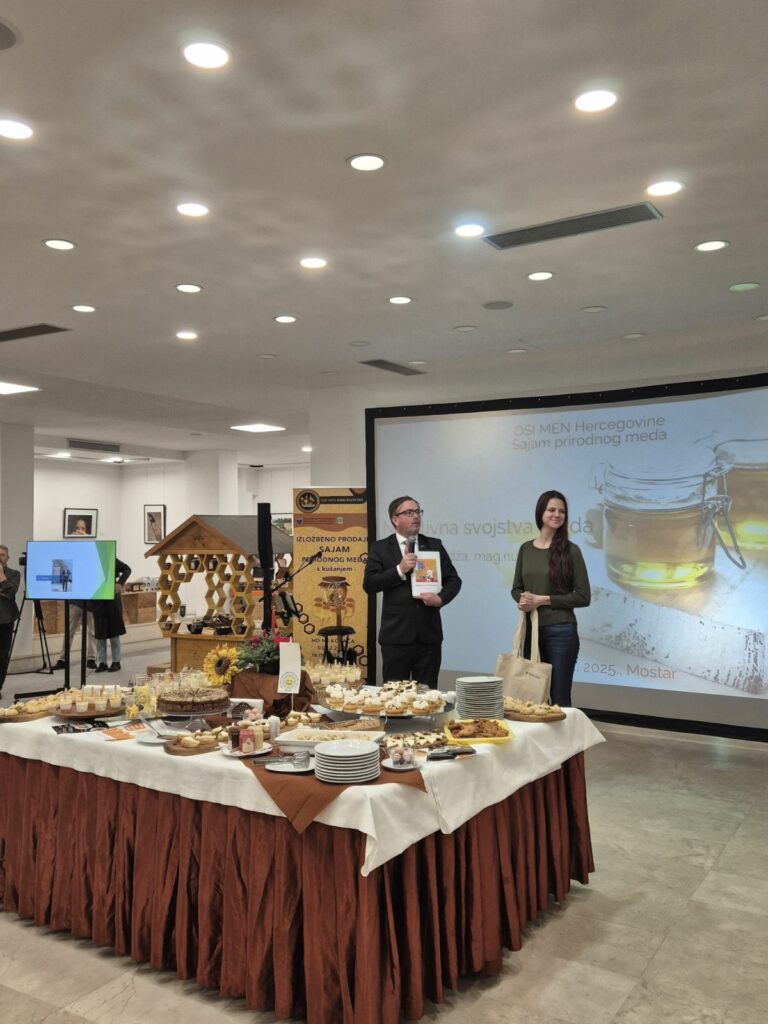
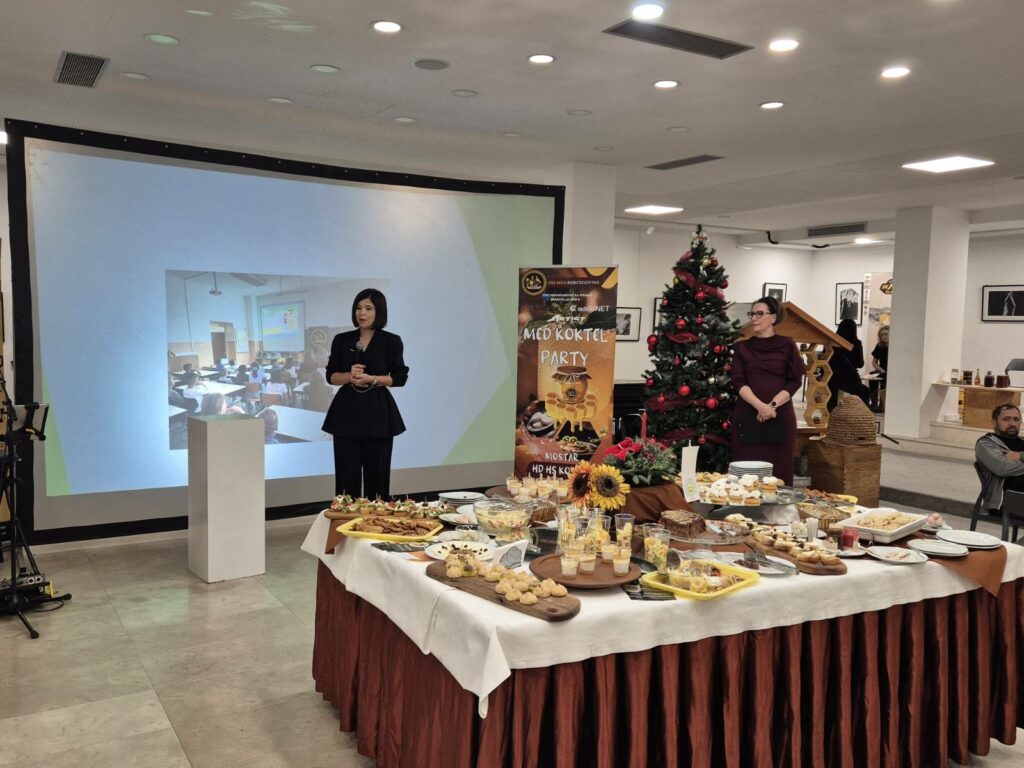
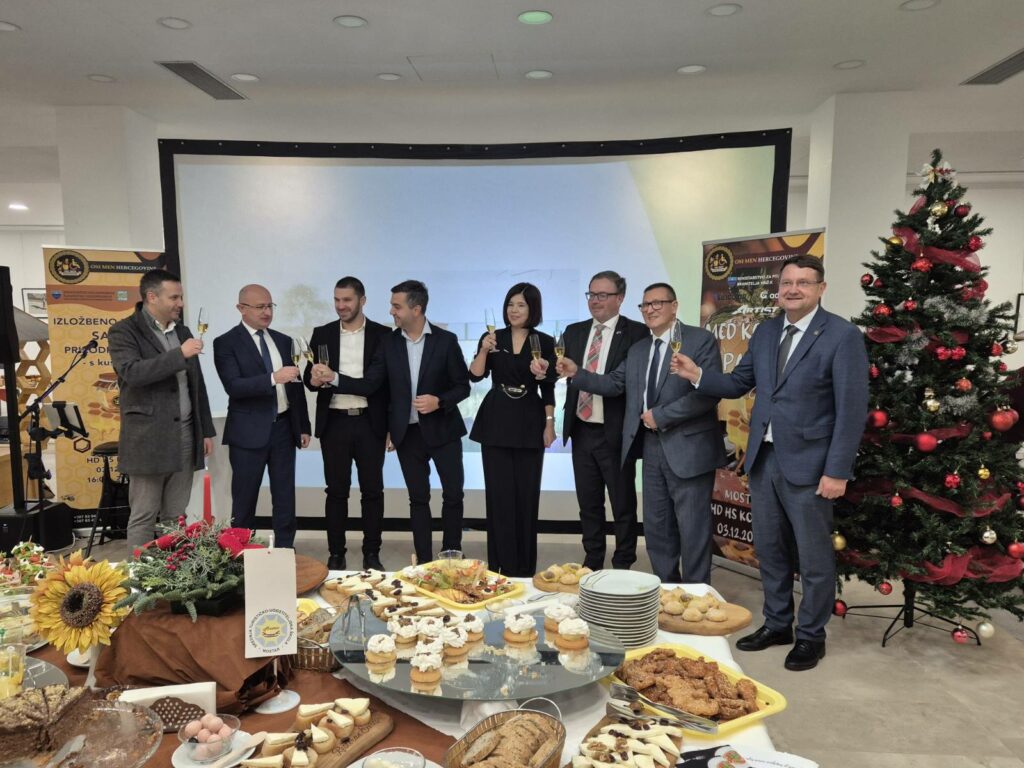
The afternoon was marked by the Honey Cocktail Party, where professional discussions intertwined with culture and social exchange. A moment of strong symbolic value was the address by the Ambassador of the Republic of Slovenia, Damijan Serdar, who on this occasion presented a Slovenian national picture book in Braille- an important contribution to inclusion and accessibility.
Participants also attended a lecture on the nutritional properties of honey, delivered by nutritionist Nevena Pandža, while the entire day was accompanied by savoury and sweet honey-based snacks and beverages. The event was further enriched by a musical performance.
Natural Honey Fair and Knowledge Transfer
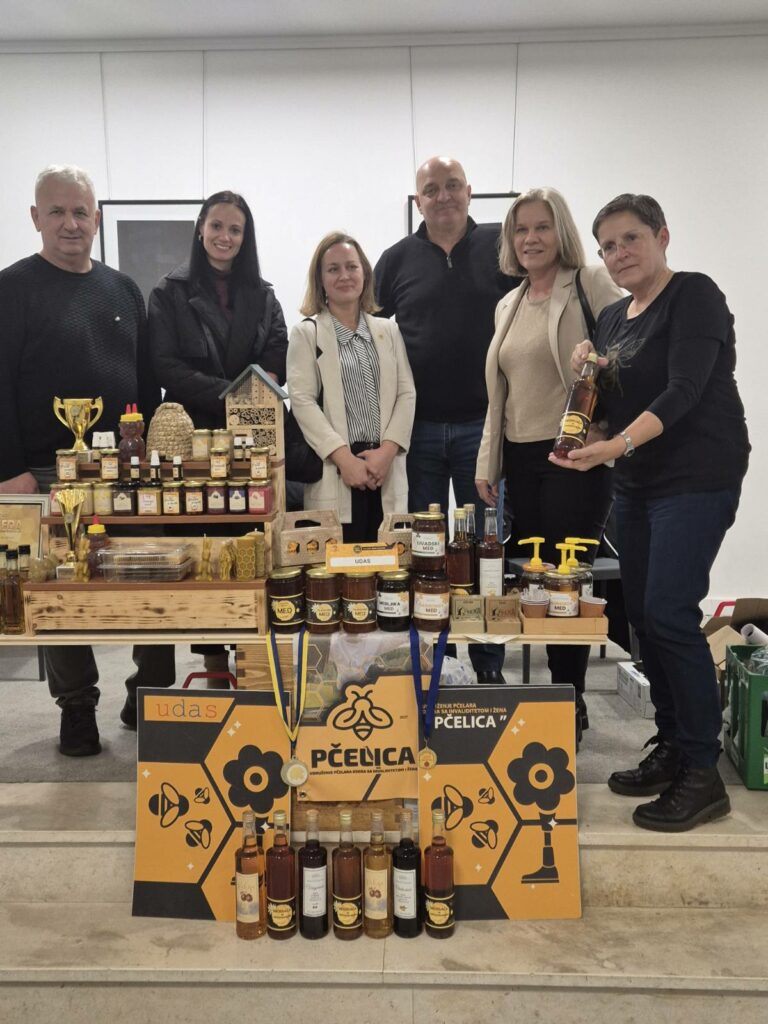
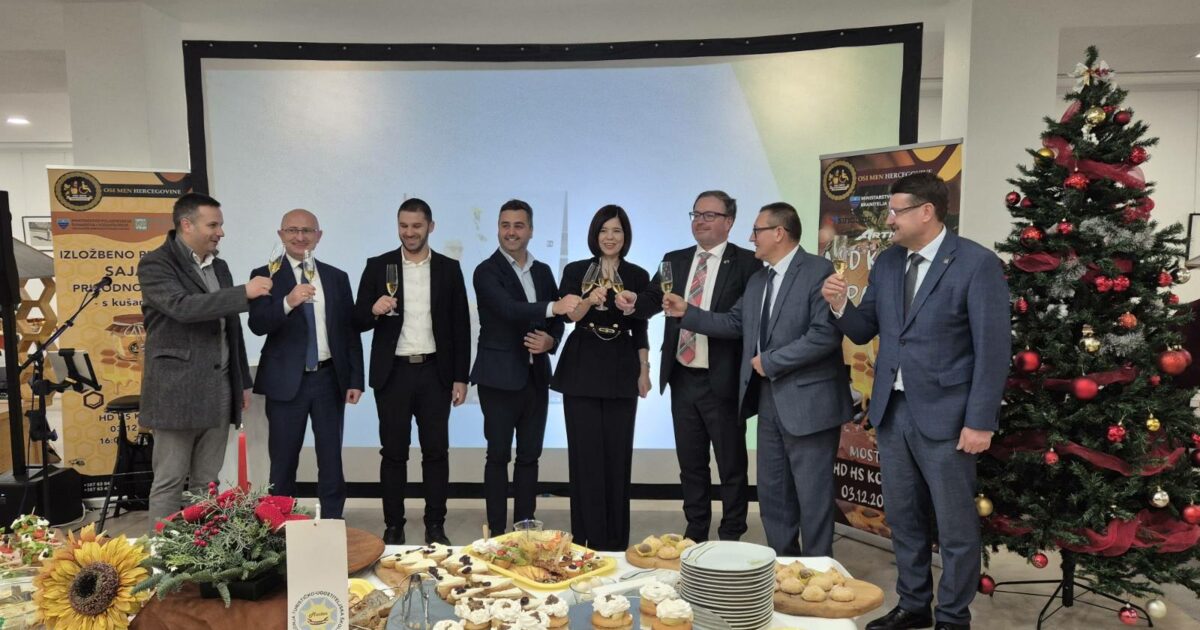
The first day concluded with the opening of the Natural Honey Fair with tasting, officially opened by Marija Buhač, Prime Minister of the Herzegovina-Neretva Canton. The fair provided a platform for local beekeepers to present their work, engage directly with visitors, exchange knowledge, and promote high-quality honey products.
As part of the project, we also presented the goals of the upcoming Training of Trainers (ToT) programme, aimed at transferring knowledge, practical skills, and pedagogical approaches to local trainers and beekeepers. Through this, we seek to ensure the long-term impact of the project, strengthen local capacities, and create sustainable opportunities for work and cooperation.
Days Two and Three: Education, Apitourism, and Capacity Building
The second and third days of the project in Mostar were dedicated to the professional seminar “Educational Beekeeping of Mine Victims and Apitourism.” The seminar took place at the Buna Hotel and brought together beekeepers, experts, and representatives of organisations working in the fields of social inclusion and sustainable development.
Opening of the Seminar and a Shared Vision
The seminar began with an official opening and welcome addresses, during which speakers emphasised the importance of education, cooperation, and long-term support for landmine survivors. The goals of the Beekeeping for Persons with Disabilities project were presented, with a particular focus on knowledge transfer, strengthening local capacities, and developing apitourism as a complementary activity.
Honey Trail, Certification, and Apitourism
A central part of the first seminar day was the lecture by Dominika Koritnik, who presented in detail the establishment of the Honey Trail, required certifications, and the “Top-Quality Bees” system. Participants gained insight into concrete legal and organisational conditions for developing apitourism, based on Slovenian experience.
This was followed by an online lecture by Tanja Arih Korošec on apitourism, its development and expansion, and opportunities for linking it with other tourism services. Special emphasis was placed on partnerships and the involvement of local communities in tourism products.
Nutritional Value of Honey and Practical Content
The second seminar day had a stronger practical focus. Participants attended a lecture on the nutritional value of honey and its use in everyday life, followed by a presentation of creamed honey and a demonstration of royal jelly harvesting techniques. The sessions were designed to provide beekeepers with practical knowledge that can be directly applied in their work.
Conclusion and Looking Ahead
The seminar concluded with a presentation of the apitourism development project in Herzegovina and a discussion on future steps. The importance of the Training of Trainers (ToT) approach was highlighted, as it ensures that acquired knowledge remains within the local environment and continues to be passed on among beekeepers, trainers, and communities.
The project in Mostar once again demonstrated that beekeeping is not merely an economic activity, but a powerful tool for social inclusion, recovery, and community building.